Faith in the Storm: Finding Jesus When Life Gets Rough
Discovering confidence in Christ’s presence during life’s most difficult moments
When Obedience Meets Adversity
Life has a way of turning rough without warning. Sometimes the hardest part isn’t the storm itself—it’s realizing it came while you were doing exactly what you were supposed to do. That reality leaves many of us asking a painful question: Where is Jesus when the waves won’t stop?
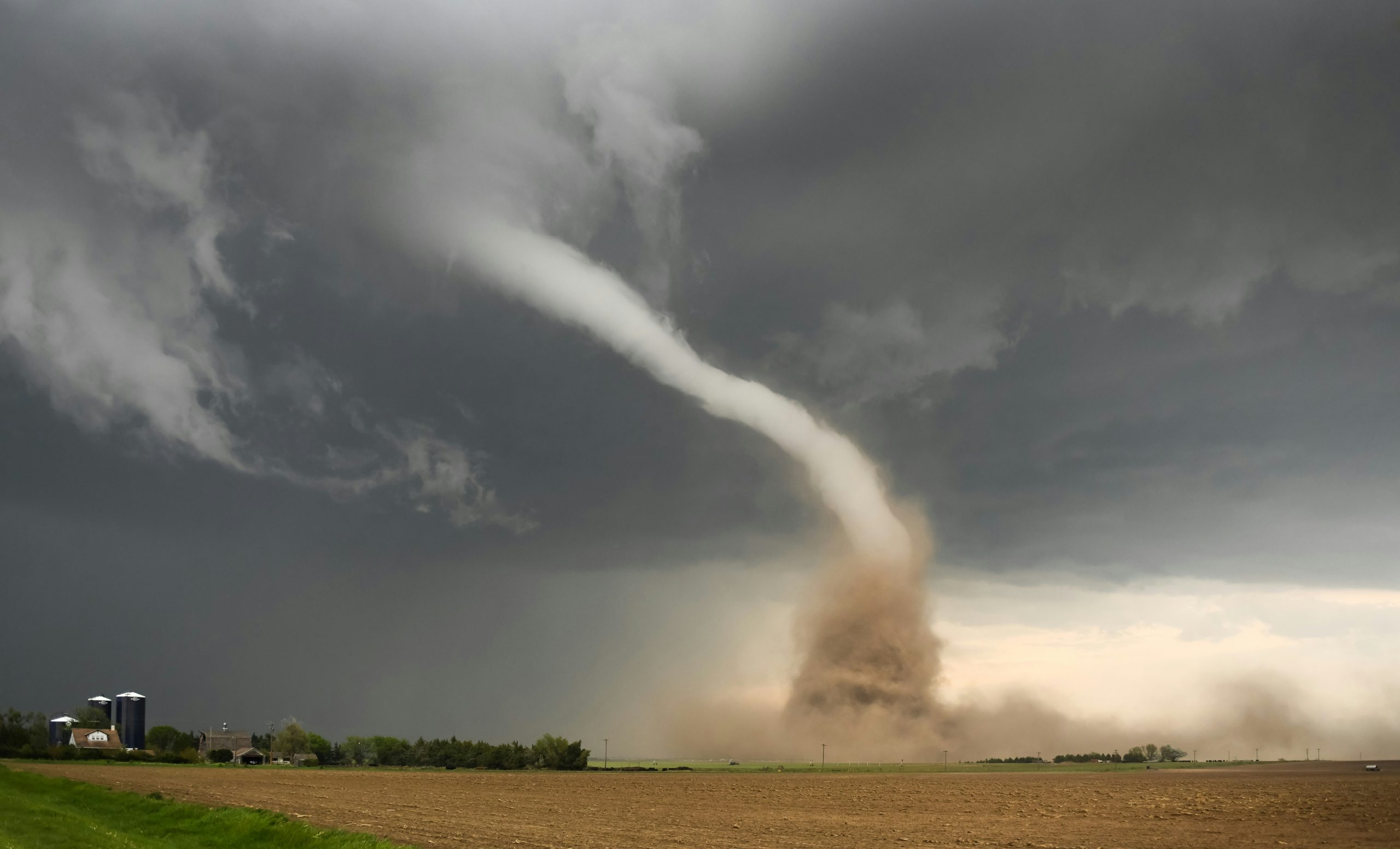
When I was around seven or eight years old, our family experienced a tornado. As a young child who wasn’t yet saved, I was terrified. The wind roared, debris flew, and my brother and I huddled in fear. But looking back now with eyes of faith, I can see something I couldn’t see then—Jesus was there with us, the calm in the midst of that roaring storm.
This same experience of fear meeting faith plays out in one of the most dramatic encounters in Scripture, found in Matthew 14:22-33. The disciples face a violent storm on the Sea of Galilee, and what happens next reveals a truth that can anchor our souls in any crisis.
The Surprising Truth About Storms and Obedience
Here’s what makes the story in Matthew 14 so striking: the disciples didn’t wander into this storm through disobedience or recklessness. Jesus Himself sent them into it.
Matthew 14:22 tells us that Jesus made the disciples get into the boat and go ahead of Him to the other side. They were following direct orders. They were right where they were supposed to be. And yet, verse 24 reveals they were straining at the oars, battling contrary winds, making painful progress through rough seas.
This teaches us a foundational truth: Just because the storm is strong doesn’t mean your obedience was wrong.
Obedience to God doesn’t guarantee a resistance-free life. Following Jesus doesn’t mean smooth sailing. Sometimes the storm itself is confirmation that you’re on assignment, doing exactly what God called you to do.
Think about that for a moment. You can be in the center of God’s will and still face overwhelming circumstances. You can be faithful in your work, your family, your ministry, and still encounter waves that threaten to capsize everything.
But here’s the hope: being in the will of God doesn’t mean you avoid the storm—it means you’re not alone in it.
Why Jesus Withdrew to Pray Before the Storm
Before the storm ever rises, Matthew tells us something crucial: Jesus sends the disciples ahead, then goes up the mountain by Himself to pray (Matthew 14:22-23).
This wasn’t a random decision. Jesus had just fed five thousand people, and the crowds wanted to make Him king by force (John 6:14-15). John the Baptist had just been executed, and grief was heavy (Matthew 14:10-13). A storm was about to test the faith of His closest followers.
Throughout the Gospels, we see a consistent pattern in Jesus’ life. Before major pressure, before suffering, before revelation, Jesus prays. Before choosing the twelve disciples, He spent the entire night in prayer (Luke 6:12). After hearing of John the Baptist’s death, He withdrew to a solitary place (Matthew 14:13). Before the cross, He went to Gethsemane to pray (Matthew 26:36-46).
Jesus went to prayer not because He was weak, but because communion with the Father always precedes confrontation with the storm.
This challenges us deeply. If Jesus—fully God yet fully human, knowing the storm was coming—still prioritized solitary prayer, how much more do we need it before, during, and after the storms of life?
While Jesus prayed on the mountain, the disciples strained at the oars. But His prayer didn’t remove His awareness of their struggle—it sharpened it. The same Jesus who prayed alone became the Jesus who walked on water toward His struggling people.
Jesus Comes in the Darkest Hour
Matthew 14:25 tells us Jesus came to the disciples during the fourth watch of the night—between 3 and 6 a.m., the darkest and most exhausting hours. They had been fighting the storm all night long.
Notice what Jesus does. He doesn’t calm the storm first. He reveals His presence first.
“Take heart; it is I. Do not be afraid” (Matthew 14:27).
This moment is more than a rescue operation—it’s a divine revelation. Many biblical scholars see this as a theophany, a manifestation of God Himself. In the Old Testament, Job 9:8 says God “walks on the sea as on dry ground.” Psalm 77:19 declares that God’s path was “through the sea.”
By walking on the water, Jesus is doing something Scripture says only Yahweh, the Lord God, can do. This isn’t just a miracle—it’s a claim to deity.
Yet the disciples, exhausted and terrified, initially mistake Jesus for a ghost (Matthew 14:26). Fear has a way of causing us to misinterpret our Savior as a threat instead of recognizing Him as our rescue.
Theologian N.T. Wright explains our need for Christ in life’s storms using the image of an anchor: “We are attached to him as though by a great metal cable… all the winds, tides and storms that may come can’t shift us.”
Wright continues with pastoral wisdom: “We are not promised that there won’t be any storms… What we are promised is that we will be kept safe.”
Jesus’ presence doesn’t always remove the storm—but it changes everything.
Where You Look Determines What You Experience
Then comes one of the most memorable moments in Scripture. Peter, recognizing Jesus, makes an audacious request: “Lord, if it is you, command me to come to you on the water” (Matthew 14:28).
Jesus gives a one-word invitation: “Come.”
And Peter does the impossible—he walks on water. But only while his focus remains on Jesus. The moment his attention shifts to the wind, he begins to sink (Matthew 14:30).
Faith isn’t pretending the wind isn’t real—it’s choosing where you look.
I learned this lesson early in life. When I was in first grade, my dad was out of town driving a semi when a severe storm rolled through Florida. The wind was loud, the rain was heavy, and I was terrified. My mom loaded us up and drove across town to my grandma’s house because the storm felt overwhelming.
Here’s what helped me in that moment—it wasn’t that the storm stopped. It was where I looked. I kept my eyes closed. Even though I could still hear the storm raging outside, closing my eyes and not focusing on what was happening around me changed everything.
Peter experienced something similar. For a brief moment, he looked in the wrong direction. He took his eyes off Jesus and felt the full weight of the wind and waves. That’s exactly what happens in our lives—circumstances can feel crushing when we focus on what’s crashing around us.
But when we lock our eyes on Jesus, the wind doesn’t always stop—it just doesn’t shake us the same way anymore.
Notice something beautiful: even Peter’s sinking faith reached a strong Savior. “Jesus immediately reached out his hand and took hold of him” (Matthew 14:31).
Faith steps out. Fear looks around. But even struggling, sinking faith still finds a Savior who reaches.
The Goal Isn’t Calm Seas—It’s Clear Worship
Matthew 14:32-33 brings the story to its climax: “And when they got into the boat, the wind ceased. And those in the boat worshiped him, saying, ‘Truly you are the Son of God.'”
The wind stops when Jesus steps into the boat. But notice what the disciples do immediately—they worship. They don’t celebrate the calm. They celebrate the Christ.
The goal isn’t calm seas—it’s clear worship.
Storms don’t just test our faith—they reveal who Jesus really is. The disciples entered that boat with incomplete understanding. They exited with a declaration of divine truth: “Truly you are the Son of God.”
Your storm may be revealing more about Jesus than you realize. In your financial pressure, your health crisis, your relational conflict, your grief—Jesus is present, and He is revealing Himself as the Son of God who has authority over every wave that threatens you.
Faith Is Confidence in His Presence
Remember that tornado from my childhood? I was a helpless child, not yet saved, but even then, looking back, I can see Jesus was there. He was the calm in the midst of the roaring storm. The wind was loud, the rain heavy, and fear was real—but He never left.
That’s exactly what happens in Matthew 14. The disciples were in the storm, doing exactly what Jesus told them to do. They hadn’t yet fully understood who He was, and the waves didn’t stop immediately—but the moment they saw Him, fear gave way to worship.
Just like then, and just like now, faith isn’t the absence of storms—it’s confidence in the presence of Jesus.
We can have confidence in the presence of Jesus—not because of who we are or what we’ve done, but because of who He is and what He has done for us.
No matter what storms you face today, He is with you—anchoring you, steadying you, and calling you to fix your eyes on Him. The wind may be strong, but your obedience isn’t wrong. The night may be dark, but Jesus is coming. The waves may be high, but He walks on water.
And when you feel yourself sinking, reach out. He is already reaching for you.
What storm are you facing today? How has Jesus revealed Himself to you in difficult seasons? Share your story in the comments below.